Enhancing Access for Justice for Women- Legal Aid Services


BACKGROUND

Establishment of legal aid clinics and legal aid committees in 21 states which receive and pursue litigation and Alternative Dispute Resolution (ADR) methods to enforce the rights of women and seek redress in situations of discrimination or the violation of the rights to human dignity especially in situations of domestic violence, cultural disinheritance, public/work place harassment and gender discrimination.


OUTCOMES / IMPACT OF THE PROJECT 

WRAPA Legal department has a performance rating that is very high for some states where their activities and interventions have been of immense benefit to women. Such states include Oyo, Ekiti, Gombe, Kaduna, Katsina, Sokoto, Lagos, Nasarawa, Bauchi, Borno, Niger, Benue, Jigawa, Anambra, Plateau, Ondo, Bayelsa, Kogi, Kwara, Ogun, Kano, and the Federal Capital Territory (FCT).

This initiative is the core of WRAPA and therefore remains an ongoing project in WRAPA. The cases vary according to dynamics experienced by women in the states. It is important to point out that violence ranks very high among the cases received by WRAPA. This has also informed the directions of WRAPA’s interventions in other projects or programmes aimed at reducing the scourge of Violence against Women in Society.

Highlights: Amina Lawal’s Case; Rosemary Dzer (Acid bath survivor rehabilitated by WRAPA. She is currently studying Computer Science at the University of Jos)

Spotlight Initiative Project

Introduction/Background

Nigeria is characterized by gender inequality in almost all areas of human development and ranks 118 out of 134 countries on the Gender Equality Index. The inadequate inclusion of women and girls’ perspectives in policy making decisions, resource allocation and implementation in economic and social sectors continues to challenge the advancement of gender equality. Negative social norms which condone or support violence against women and girls and harmful practices remain pervasive. Gender-based violence is widespread and 30 percent of women aged 15-49 have reported experiences of sexual abuse.

The Spotlight Initiative is a global, multi-year partnership between the European Union and the United Nations (EU-UN) Agencies to eliminate all forms of violence against women and girls. Spotlight Initiative responds to all forms of violence against women and girls, with a particular focus on sexual and gender-based violence and harmful practices. The Initiative is so named as it brings focused attention to this issue, moving it into the spotlight and placing it at the centre of efforts to achieve gender equality and women’s empowerment. It is the world’s largest targeted effort to end all forms of violence against women and girls.

On the 7th of November, 2019, WRAPA signed a Project Cooperation Agreement as one of the Implementing Partners on the EU-UN Spotlight Initiative (SI) Programme in Nigeria and to focus its work in FCT, Adamawa and Sokoto States.

Justification

In Nigeria, like in other jurisdictions, VAWG/SGBV remains a challenge that significantly constrains women’s autonomy and opportunities. The Nigeria Demographic Health Survey (NDHS) 2013. (NPC and ICF International 2014) indicates that 28 percent of women in Nigeria aged 15–49 have experienced some form of physical or sexual violence; 11 percent had experienced physical violence within the 12 months prior to the survey. Almost 45 percent of the women who had experienced violence never sought help or told anyone about the incident. The harmful practices of child marriage and female genital mutilation are also prevalent across the country; Conflict in Nigeria’s North East geopolitical zone has further contributed to a steep rise in violence targeted against women and children by Boko Haram.

As a result of this, WRAPA is implementing the Spotlight Initiative Project.

WRAPA will build on its experience, and history in propelling knowledge shift, and coordinating entities to advance sustainable shift in tackling VAWG/SGBV/HP and SRHR in the project sates, while engaging community influencers for sustainability of interventions. Target groups will consistently be the most marginalized women and girls, including those who face intersecting forms of discrimination or multi-deprivation, such as those with disabilities, women and girls living with HIV/AIDS, the poorest and those living in most difficult to access communities will be target, as to “leave no one behind”.

Objectives

The major objective of Spotlight Initiative is to eliminate all forms of violence against women and girls by 2030.

Techniques

To achieve the objective of the Spotlight Initiative Project, WRAPA will target key role players that are central to the achievement of systemic shift in VAWG/SGBV/HP in these locations. Interventions would be implemented in partnerships with Save the Child Initiative (STCI) in Sokoto State, Hope and Rural Aid Foundation (HARAF) in Adamawa State and Voice of Disability Initiative (VDI) in FCT to focus on building capacity of both individual and institutions, to “influence and act”, across state and non-state actors. Key interventions will include enhancement of project management skills, facilitating constructive and result based dialogue and convening, communicating for impact and advocacy, adapting in alternative solutions, and effective coordination, all aimed at improving the human and institutional agency to advance progress in VAWG/SGBV/HP that ensures provision of sexual and reproductive health services.

Outcomes

Spotlight Initiative Project interventions focus on six mutually-reinforcing programming pillars. WRAPA is working on Outcome 6. Women’s rights groups, autonomous social movements and civil society organizations, including those representing youth and groups facing multiple and intersecting forms of discrimination/marginalization, more
effectively influence and advance progress on GEWE and ending VAWG

If (1) the knowledge, expertise and capacities of women’s rights organizations, autonomous social movements and civil society organizations, including those representing youth and groups facing multiple and intersecting forms of discrimination is drawn upon and strengthened,
and (2) the space for women’s rights organizations, autonomous social movements and civil society organizations including those representing youth and groups facing multiple and intersecting forms of discrimination’s expression and activity is free and conducive to their work,
and (3) multi-stakeholder partnerships and networks are established at local, national, regional and global level with women’s rights groups and autonomous social movements and civil society organizations, including those representing youth and groups facing multiple and intersecting forms of discrimination,
then (4) women’s rights organizations, autonomous social movements and civil society organizations will be able to influence, sustain, and advance progress on GEWE and ending VAWG policies and programmes that respond to the needs of all women and girls, including those facing multiple and intersecting forms of discrimination,
because (5) the activism of women’s rights organizations, autonomous social movements and civil society organizations, including those representing youth and groups facing multiple and intersecting forms of discrimination is a crucial driver of progress on efforts to end VAWG.

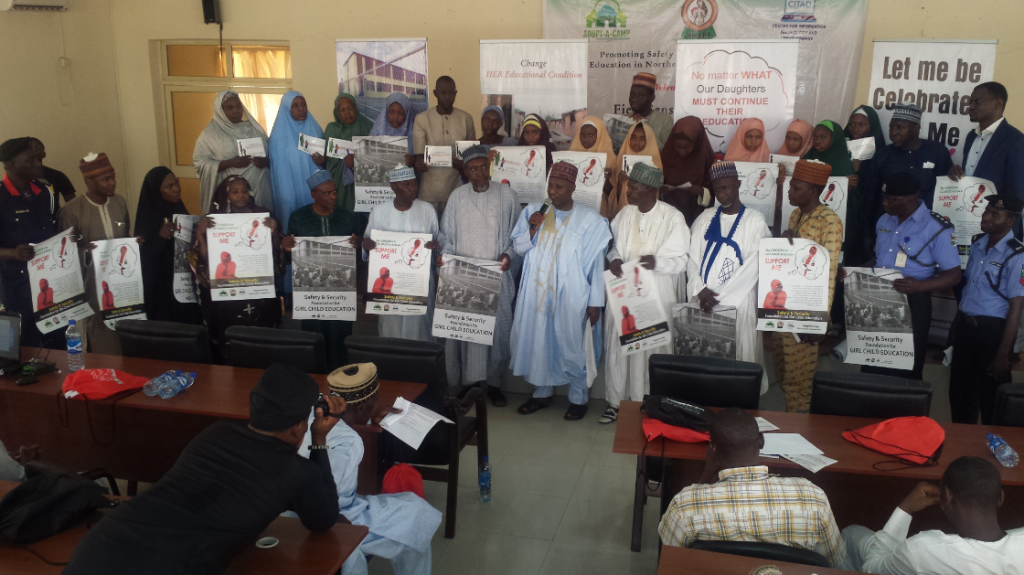
Mitigating COVID-19 Impacts On Girls’ Education: Recovery and Resilience

Background

Despite the fact that access to formal education in Nigeria is a fundamental human right, a UNICEF report states that 10.5 million of the country’s children aged 5-14 years are not in school.[1] Only 61% of 6 to 11-year-olds regularly attend primary school. Some states in the north east and north west of the country have more than half of the girls not enrolled in schools as marginalization ensures that girls are deprived of basic education. A struggle was on-going prior to COVID-19 to ensure young children stay in school and have access to proper education, as Nigeria contributes approximately 20%[2] of the total global out-ofschool population.

In crisis situations as prevailing in Northeast Nigeria, access to education has been affected by an over ten (10) year-long insurgency. The recurring communal conflicts, gives a high number of out of school children, high mortality rate, early marriage, child trafficking and slavery amongst others. A significant number of these are girls have lost the opportunity of enrolment or completion of formal education, as a consequence of limited safety and security. Acute poverty in average families discourages the return of their daughters to school as a priority[3]. This presents a major barrier to those girls desiring to return to formal school systems and complete their basic education.

The COVID-19 pandemic forced most governments around the world to temporarily close educational institutions to contain the spread of the virus. At the peak of the pandemic, more than 1.5 billion learners, or over 90% of the world’s student population from preprimary to higher education, have seen their education disrupted and at times interrupted.[4] As the COVID-19 Pandemic runs its course, many governments are implementing measures that limit the number of people congregating in public places. Such measures have disrupted the normal functioning of schools. Due to the fluid infection indices in different locations, the duration of such measures have varied, with the likelihood of phased continuation of learning in countries.

The adverse effect of lost educational opportunities would mean- girls are likely to be exposed to domestic violence, rape, early and forced marriage, early pregnancies, and other forms of human rights violations, and loss of dignity. To mitigate these risks, there is a compelling need to seek innovative ways of ensuring that these girls return to school and complete secondary education.

Problem Statement

On March 19th, 2020 a circular from Federal Ministry of Education granted an approval for the closure of all schools to prevent the spread of the Corona virus (COVID-19). States in Nigeria contextualized this circular at different times and cautionary forms. The closure of schools affected close to 46 million students throughout the country, however, 4.2 million school age children were more likely to be affected in Bauchi, Adamawa & Yobe States. These are the most vulnerable groups of children targeted by the education partners through the mechanisms of the HRP. About 400,000 IDP children attending some form of learning in the camps and host communities have been acutely affected by the stoppage of learning activities. Planned school activities for the first and second quarter of 2020 have not been completed as planned.

The FCT remains a high COVID-I9 infection location second to Lagos State. Research and experience show that most crises situations and public health outbreaks have distinct gendered impacts, with preparedness and response efforts being weak or totally blind to the gender dimensions of the crises. There is usually a widening of inequalities and opportunities to advance gender equality are lost to non-prioritization of the needs of women, girls and other vulnerable and marginalized populations that are often disproportionately affected. Increased risks for girls and young women increase with gender-based violence, exploitation, early marriage and unintended pregnancy being impact indices. This is especially the case as girls are out of school.

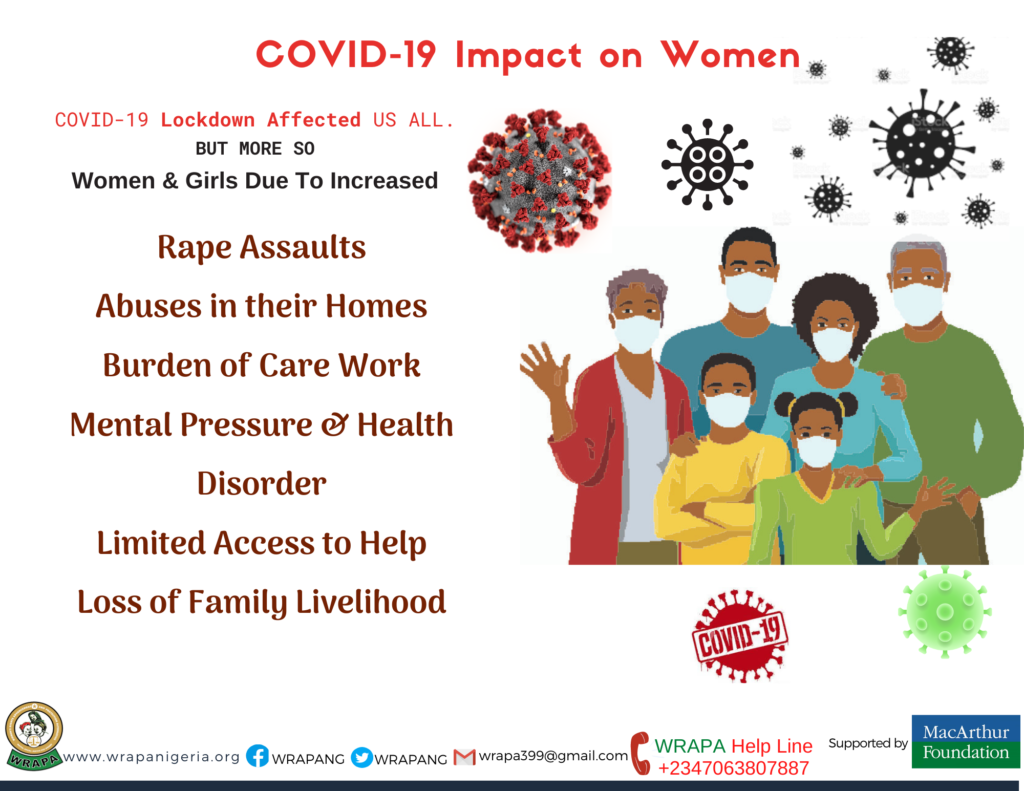
The impact of restrictions and school closures in the FCT has registered disproportionate impacts of increased domestic violence, a high spike in rape of minors and teenage girls across the country[5]. Marginalised girls are also left out of opportunities of alternative learning channels either due to poverty, lack of requisite technology tools and infrastructure or sheer pressure on the skewed time use weighted to care giving responsibilities. Compounding the weaknesses in effective compliance and timely testing, there are apprehensions on health safety.

Justification

Recovery is slow in the FCT, and other states in Nigeria, where a daily infection index calls for caution and strict compliance. Confidence levels to re-open schools remain low, with prospects for re-opening schools looking at a 12 months window (July – June 2021). Meanwhile, the overwhelming economic impact will cause marginalised girls to drop out even when schools re-open having missed over one year months of schooling (March 2020 – June 2021). The vulnerability of these adolescent girls will persist due lost opportunities to return to school and few or no support to catch up on lost learning. These cumulatively will adversely affect their chances for quality education.

As COVID-19 pandemic recovery efforts are strengthened and personal responsibility camapigns increase, the policy and practice considerations for learning to continue through alternative delivery modalities. Recovery efforts should be tailored to seize the window of opportunity to promote innovation, strengthen the resilience and gender-responsiveness of education systems, to close gender gaps and other inequalities in and through education in select states experiencing high level of out of school girls.

WRAPA will be working in 10 schools in the FCT schools to probe school responses as they struggle and are being reframed and redefined as safe spaces for learning during and beyond COVID-19, while carrying out high level advocacy with a national focus in Adamawa, Sokoto, Katsina, Jigawa & Plateau States. Focus will be on rapid design processes, adaptation and implementation of inclusive and affordable responses within and beyond COVID-19 recovery phases. Activities will include creating awareness and engaging both the girls and stakeholders to ensure return, retention and safety for girls’ educational continuity.

Project Goal & Objectives

a) Goal: Girls access to education, as a right is not truncated by the impacts of COVID-19 pandemic in the FCT, Adamawa, Sokoto, Katsina, Jigawa & Plateau States.

b) Objectives

  1. Facilitate support for marginalised girls to access alternative community driven learning opportunities to mitigate the impact on teaching and learning arising from school closures.
  2. Facilitate and support access to Mental Health and Psychological Support Services (MHPSS) for girls to build resilience through catch up interventions to close gaps in lost learning
  3. Advocacy for policy and practice innovations to ensure the school environment is gender sensitive and able to respond to girls special needs within and beyond public health, social and economic crises.

Geographical Prioritization

Planned interventions will target 10 schools in the Federal Capital Territory (FCT), and policy interventions in Adamawa, Katsina, Jigawa, Sokoto & Plateau states of Nigeria. The focus will be Primary and Junior Secondary schoolgirls.

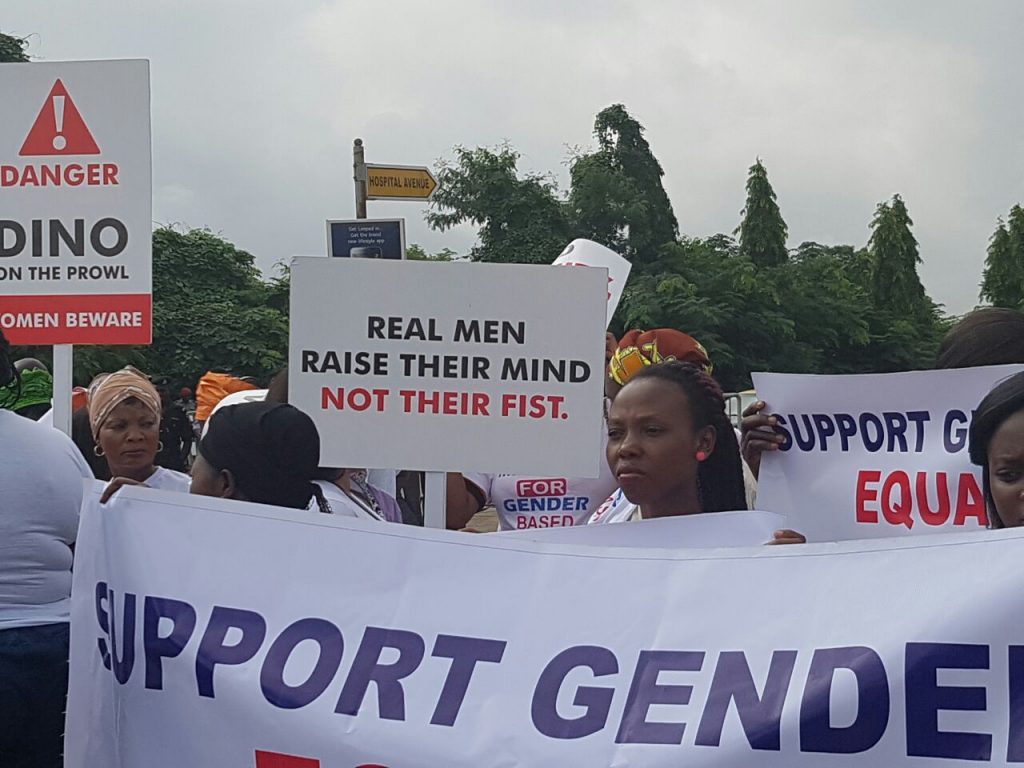
VIOLENCE AGAINST WOMEN AND GIRLS(VAWG) Faith and Culture Leaders Supporting VAWG Accountability Project

Background

Gaps in legal and social frame works compounded by weak enforcement are the key drivers in the growing impunity for VAWG and Sexual Gender Based Violence (SGBV) in Nigeria. Redress for survivors and accountability by perpetrators are in abysmal figures for violations in private and public spaces. Efforts by organizations, working on Violence Against Women and enactment of legislations at federal and state levels especially the Violence against Persons Prohibition (VAPP) Act 2015, the adoption of National Action Plan on UNSCR 1325 are yet to show significant changes.

However, the establishment of Sexual Assault Referral Centres (SARC), and Sexual Domestic Violence Response Teams, across the country is gradually availing VAWG survivor’s defined, specialized and formal support.

Advocacy for protection, access to services and justice as well as accountability has remained focused on sensitization campaigns for legal reforms. Roles or partnerships to vest responsibility or harvest inputs from key actors of faith and culture has been limited to seeking legitimacy for interventions. Best result for effective response to systematic VAWG and SGBV require working at all levels, and moving from sensitization to action by strategic sectors and key influencers who are engaged and not vilified as gatekeepers or perpetrators.

The institutions of faith and culture are grounded in theological legitimacy. This qualifies them to frame discourse on issues aimed at extracting commitments for peace, justice and social equity. In addition, these institutions are considered an embodiment of moral values, which confers on them some influence in personal and family spheres, as well as social attitudes and behavior. The centrality of religion in Nigeria enables religious institutions and leaders to exercise considerable influence, with extensive networks and communication channels, thus playing a strategic role in shaping opinion, influence government policy, advocating, and disseminating messages.

Problem Statement

In Nigeria, women and girls are subject to systematic disadvantage and discrimination – particularly those who are poor, live in rural areas and are from particular social groups. Gender inequality is manifested in violence against women and girls (VAWG), barriers to accessing quality education for girls, early marriage, poor reproductive and maternal health, and legal discrimination (particularly regarding family law). The complex interplay of faith, culture, economic, political, historical and other social indices combine to underscores the rising impunity for VAWG. Formal and informal sanctions and remedies present used signals of tacit endorsement of some forms of violence suffered by women and girls. Provisions that discriminate or undermine the dignity and worth of women are found in the Penal and Criminal Codes as well as the Evidence Act. At the society level, discriminatory traditions, codes of conduct continue to negatively influence the treatment of women and girls. Sexual and Gender violence is a violation of fundamental human rights. It is a global health and development issue cutting across economic wealth, culture, religion, and age. VAWG disproportionately affects women and girls and it also affects men and boys. Wherever VAWG occurs, it presents a major obstacle for the achievement of justice and becomes a critic barrier to sustainable development, economic growth and lasting peace. Institution of faith and culture have role in a purpose driven endeavor to counter faith misrepresentations that endorse or perpetrate actions inimical to the human dignity and the bodily integrity of women and girls. Culture leaders need to uphold the trust of their subjects for protection in every circumstance. This is especially considering deep –seated apprehensions for dedicated legislations and social policy seeking to curtail VAWG or award redress. Such attempts are perceived as Western impositions and held with suspicion.

Justification

Religious and Traditional Leaders, institutions and organizations are important influencers in Nigeria. These organizations are considered to have more legitimacy, respect and influence than secular NGOs. They are more established and have closer links with communities. They are held in reverence with less suspicion and even exercise limited enforcement capacity. These organizations also serve as arbitration platforms in dispute resolution relating to family life. Limitations however abound in legal frameworks, offering little or no respite to VAWG survivors thereby limiting women’s capacity to seek justice for abuses especially for violations within family settings.

As leading voice in SGBV campaigns WRAPA will use social accountability mechanisms driven by strengthened women’s agency and voice to demand for VAWG accountability from institutions of faith and culture, to support advocacy and influence prevention and response to VAWG.

Aim & Objectives

Women and Girls are free from all forms of violence, and from the threat of such, as a result of increased appreciation of the rights of women and improved accountability by leaders of culture and faith.

 Methodology

Theory of Change If coordinated interventions targeted at challenging social norms and behavior is operated at multiple levels (i.e. individual, familial relationship, community and society); AND women are educated are aware of their fundamental human rights and right to dignity, voices are strengthened and amplified, with supported safe spaces and alliances to promote women’s rights and bodily integrity at the community and national level; AND, Religious and culture leaders are aware of women’s rights and are protecting them; THEN, Sermons and messages of leaders of culture and faith will create and popularize broad appreciation of women in the society; AND, Religious and cultural leaders will act as gatekeepers, appreciate women as partners, and ensure accountability for perpetrators of VAWG.

Subscribe to our
Newsletter

Contact

The organisation seeks to advance and protect the rights of women as provided by national laws and policies, regional and international treaties

No 34 Ekikunam Street Beside NUJ Secretariat, Utako-Abuja, Nigeria

About Us

Media

Get Involved

CALL: +234-818-869-9961

Contact

automaty bez registrace