Hausa 2018 LawXXXII Violence Against Persons Prohibition (1)

DOKAR DA TA HANA DUKKAN WANI NAU’IN CIN ZARAFI DA YA HAƊAR DA CINZARAFI TA HANYAR GWADA ƘARFI KO JIMA’I KO NA ƁACIN RAI KO NA GIDA KO NA WAƊANSU MUGGAN AL’ADUN GARGAJIYAKO TA HANYAR NUNA WARIYA KO BAMBANCI GA WAƊANSU, HAKA KUMA DOKAR ZA TA BAYAR DA DUKKANIN KARIYA DA BIN HAƘƘIN WAƊANDA SUKA CUTU, TARE DA HUKUNTA MASU AIKATA LAIFIN -2018

WANNAN DOKA Majalisar Dokoki ta Jihar Kaduna ce ta yi ta, kuma an Tsara Wannan Doka kamar haka:

[wpdm_package id=’9284′]

A Gendered Social Accountability Tool kit for Women

The Gendered Social Accountability Toolkit is designed for a wide range of stakeholders interested in advancing gender equality in Nigeria, including civil society organisations, policy makers, community leaders, and gender advocates.

The toolkit provides practical guidance on how to conduct these tools and includes case studies to help users apply the concepts to real-world situations. Additionally, the toolkit includes information on monitoring, evalution, and reporting, as well as a directory of Women’s Rights organisations and desk officers in relevant Nigerian MDAs.

[wpdm_package id=’9030′]

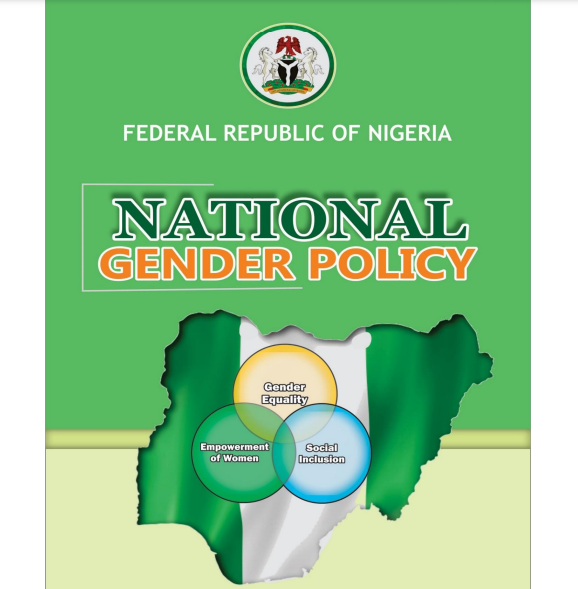
The National Gender Policy 2021

The National Gender Policy was developed in 2006 to provide strategic policy guidance for mainstreaming gender at all levels as well as address the inequalities that exist in the socioeconomic sphere. In tandem with emerging global trends, particularly as the global development agenda translated from the Millennium Development Goals to Sustainable Development Goals, a review of the National Gender Policy became expedient to address current challenges.

Since its inception, the policy statement and its directives have been bolstered through various regional and international agreements, to which Nigeria is a party; aimed towards gender justice, gender equality, women’s empowerment, and social inclusion. The ERGP – the Nigeria Economic Recovery and Growth Plan and its recent review – the new Nigeria’s National Economic Plan makes a national commitment to re-dressing long-term systemic discrimination against women, identifying and overcoming the limitations to the empowerment of women and men, and social inclusion issues; and ultimately creating a society that values gender balance and equity for ALL.

[wpdm_package id=’9029′]

VAWG Baseline Survey Report

The baseline study primarily focuses on baseline quantitative data collection and analysis for a set of key performance indicators (KPI) contained in the monitoring and evaluation plan. The study is also intended to generate qualitative and quantitative data that will establish the current situation in relation to the VAWG project specific results and also provide some intervention strategies that could work given project context. It is hoped that at the end of the study, there would be evidences that will provide WRAPA, VAWG partners and other stakeholders some benchmarks to implement and measure the defined project’s outputs, outcomes and impacts.

[wpdm_package id=’9028′]

Strengthening Women’s Voice and Agency

This resource kit builds upon WRAPA support to women and girls over the years, which combines survivor-based approaches, intervention strategies and expertise. This tool constitutes a flexible tool that can be used in different contexts, locations and situations, and as apart of a broader intervention to strengthen women’s voice and agency. It is hoped that it will be helpful to promote women and girl’s rights, through knowledge shift of relevant laws, legislations, and fundamental human rights as women in Nigeria.

[wpdm_package id=’9027′]

Manual on Enhancing Knowledge on Women’s Right, Legislation and Best Practices

This resource kit builds upon WRAPA support to women and girls over the years, which combines survivor-based approaches, intervention strategies and expertise. This tool constitutes a flexible tool that can be used in different contexts, locations and situations, and as apart of a broader intervention to strengthen women’s voice and agency. It is hoped that it will be helpful to promote women and girl’s rights, through knowledge shift of relevant laws, legislations, and fundamental human rights as women in Nigeria.

[wpdm_package id=’9026′]

Manual to Strengthen Women’s Voice and Agency

This resource kit builds upon WRAPA support to women and girls over the years, which combines survivor-based approaches, intervention strategies and expertise. This tool constitutes a flexible tool that can be used in different contexts, locations and situations, and as part of a broader intervention to strengthen women’s voice and agency. It is hoped that it will be helpful to promote women and girls resilience and well-being across Nigeria.

The Ford Foundation funded project seeks to strengthen the voice and agency of women and girls to demand for accountability from leaders of culture and faith on SGBV issues.

[wpdm_package id=’9025′]

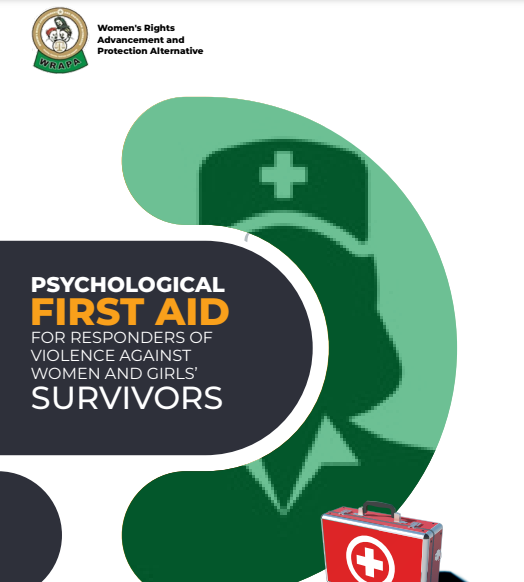
Psychological First Aid for responders of Violence Against Women and Girls Survivors

Globally, an estimated 736 million women, almost one in three, have been subjected to different forms of violence at least once in their life (WHO, 2021). 72% women have been sexually abused, 44% of girls are married before 18 years, 30% of women have experienced physical violence by age 15, and 25.3% of women have experienced Female Genital Mutilation (Oluoma, 2020). Gender Based Violence in particular is one major crisis confronting so many women and girls in our society. Unfortunately, this crisis does not leave women and girls the same way. It negatively impacts on their mind and behaviour which results in affecting other areas of their lives.

[wpdm_package id=’9024′]

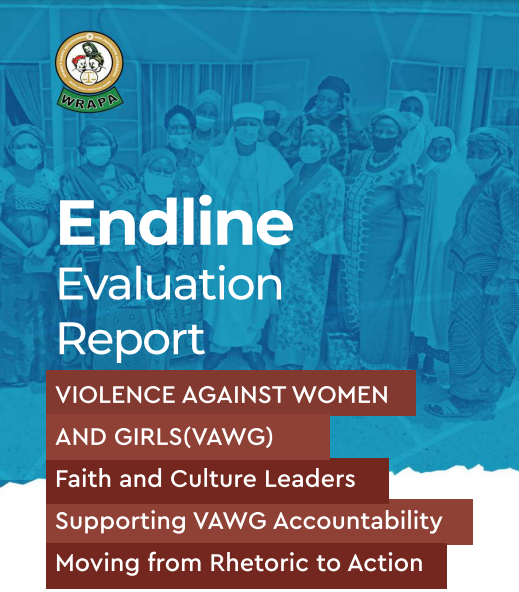
Endline Evaluation Report – VAWG faith and culture leaders supporting VAWG accountability moving from rhetoric to action

The drive towards the achievement of the Sustainable Development Goals (SDGs) before 2030 set mark across countries of the world, has always been on the front burner, even as the tide of challenges confronting the attainment of these goals seems to be getting stronger in countries where poverty, hunger, poor health outcomes, gender inequality, and lack of access to basic education, are prevalent. In Nigeria, the frequency of insurgency, banditry, insecurity, and internal conflicts, have slowed down the propensity toward the attainment of the SDGs. This development is also largely responsible for displacements of families and communities, loss of livelihood, sexual and Gender-Based Violence)SGBV), Violence Against Women and Girls (VAWG), food insecurity, malnutrition, and increased vulnerabilities, manifesting in poor health and living conditions, and consequent spread of Internally Displaced Persons (IDP) camps.

[wpdm_package id=’9023′]

Revised 2021-2026 National Gender Policy

The National Gender Policy was developed in 2006 to provide strategic policy guidance for mainstreaming gender at all levels as well as address the inequalities that exist in the socioeconomic sphere. In tandem with emerging global trends, particularly as the global development agenda translated from the Millennium Development Goals to Sustainable Development Goals, a review of the National Gender Policy became expedient to address current challenges.

Since its inception, the policy statement and its directives have been bolstered through various regional and international agreements, to which Nigeria is a party; aimed towards gender justice, gender equality, women’s empowerment, and social inclusion. The ERGP – the Nigeria Economic Recovery and Growth Plan and its recent review – the new Nigeria’s National Economic Plan makes a national commitment to re-dressing long-term systemic discrimination against women, identifying and overcoming the limitations to the empowerment of women and men, and social inclusion issues; and ultimately creating a society that values gender balance and equity for ALL.

[wpdm_package id=’9022′]

Subscribe to our
Newsletter

Contact

The organisation seeks to advance and protect the rights of women as provided by national laws and policies, regional and international treaties

No 34 Ekikunam Street Beside NUJ Secretariat, Utako-Abuja, Nigeria

About Us

Media

Get Involved

CALL: +234-818-869-9961

Contact

automaty bez registrace