

One of the most persistent challenges in women’s rights work within Muslim communities is the false belief that women’s rights are foreign to Islam. This belief has created suspicion around conversations on consent, maintenance, dignity, divorce, custody, documentation and protection from harm. It has also made some communities treat women’s rights advocacy as an external agenda rather than a call to uphold justice within the family.
As a practitioner working at the intersection of gender, faith, communication and community change, I have seen how this misunderstanding can limit progress. Many communities are not necessarily rejecting justice for women; sometimes, they are rejecting the language in which the message is presented. When women’s rights are framed only in technical, legal or donor language, the message may not reach the hearts of those who shape everyday family decisions.
This is why faith-based engagement matters.
In Muslim communities, the Friday sermon is more than a weekly religious obligation. The Minbar is a trusted space of guidance. It is where people are reminded of their duties, corrected with wisdom, and called back to justice, mercy and accountability. What is said from the minbar often travels beyond the mosque. It enters homes, shapes family conversations, influences community attitudes and guides how people understand right and wrong.
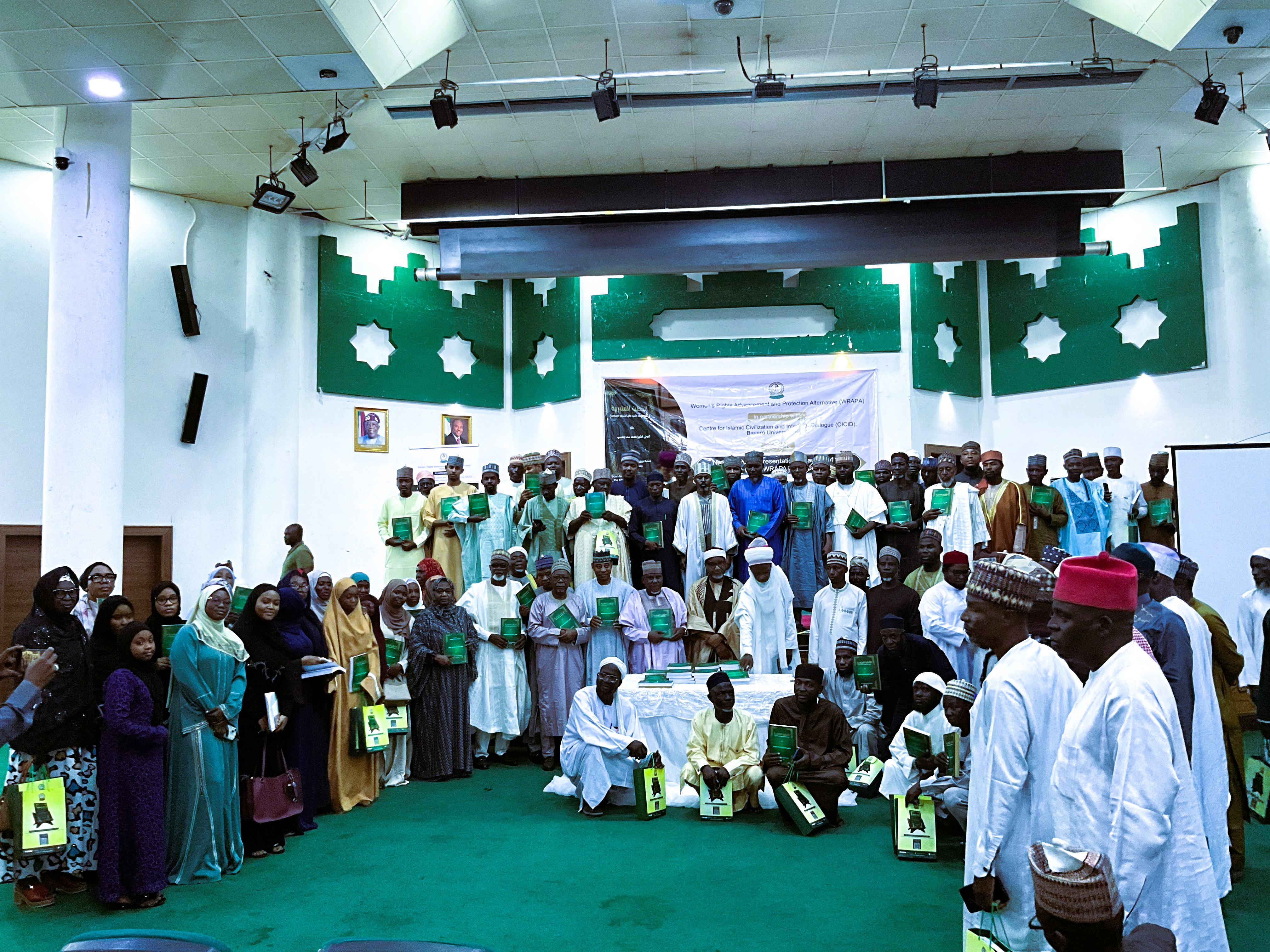
A useful example can be found in WRAPA’s Model Khutbah on Islamic Family Law Matters. The first edition was not merely prepared as a book; it was tested, preached and accepted in communities. Its aim was simple: to use the Friday sermon to remind Muslim families about justice, mercy, dignity and responsibility in marriage and family life.
The Khutbah addressed issues that affect many homes: marriage, consent, divorce, maintenance, custody, the dignity of women and girls, and the responsibilities of husbands and wives. These are not foreign matters. They are issues on which Islam has already provided guidance. The value of the Khutbah model was that it brought this guidance closer to people through a platform they already trusted.
The intervention began across seven North-Western states: Sokoto, Zamfara, Kebbi, Katsina, Kano, Kaduna and Jigawa. The Khutbah was prepared with Islamic scholars, jurists, clerics and people knowledgeable in Islamic family law. It was translated into Arabic, Hausa and English, and reviewed through respected Islamic structures, including the Jama’atu Nasril Islam Fatwa Committee. This process mattered because legitimacy was built before the message reached the mosque.
The scale of reach was significant. The intervention reached 105 mosques, engaged 136 imams, reached 1,132,000 Muslim homes, and touched the lives of about 1.9 million Muslim women. Beyond the figures, the deeper lesson is that the Khutbah became a community guidance tool. It entered mosques, homes and public conversations.
The results also showed that faith-based communication can shift how people understand practical protection in marriage. Before the Khutbah, only 31% of respondents strongly agreed with the use of marriage certificates. After the Khutbah, this increased to 48%. Disagreement reduced from 37% to 17%. Strong support for marriage agreements also increased from 31% to 42%, while disagreement reduced from 37% to 21%.
These figures are important because marriage documentation is not only a bureaucratic process. It can be a tool of protection. It can help clarify responsibilities, protect agreed conditions, reduce denial, and support women’s access to justice when disputes arise. In many communities, women face difficulty claiming maintenance, custody, divorce-related entitlements or protection from harmful practices because there is no clear record. Documentation can move family matters from uncertainty to accountability.
The intervention also showed early signs of practice change. Two mosques in Katsina and Zamfara began using Islamic Family Law registration and certificate formats. The Khutbah text later moved beyond the original pilot locations and was used in Adamawa and Kogi.
This is where the lesson for development practice becomes clear: change is more likely when communities do not feel that their values are being dismissed. The Khutbah model did not ask communities to choose between Islam and women’s rights. It showed that women’s rights in marriage and family life can be discussed from within Islamic teaching itself.
The message also moved beyond the mosque into courts, radio, newspapers, television, interviews, social media and community conversations. In the first pilot month, the report documented 31 listener responses from live radio programmes. In the first week of media publicity alone, referrals were received on three custody cases, two forced marriage cases and five domestic violence cases.
This matters because awareness is not enough. A strong message should help people recognise injustice and know where to seek support. In this case, the Khutbah opened a conversation. That conversation encouraged some people to name the harm they were experiencing and seek help.
The model also speaks to access to justice. In many communities, formal justice systems can feel distant, costly, slow or intimidating. Community-based mechanisms, when properly guided, can provide trusted pathways for mediation, counselling and peaceful resolution. The use of Hakamain systems for arbitration and counselling shows that local faith-rooted structures can support family justice when they are aligned with fairness, dignity and protection from harm.
For me, the strongest lesson is this: the Friday minbar is a powerful, persuasive space with potential for change at scale. When an imam communicates, people listen and comply. Women’s rights in marriage and family life can be an Islamic discussion, not a foreign imposition. Protecting women’s rights to dignity, maintenance, consent, documentation and fairness in divorce are part of justice, mercy and responsibility in Islam.
Development actors, policymakers and donors must learn from this. Women’s rights work in faith communities cannot rely only on external language. It must engage the moral vocabulary, trusted institutions and lived realities of the people it seeks to reach. Religious leaders are not peripheral actors in community change. In many contexts, they are central to how people understand family, duty, justice and social responsibility.
This does not mean every religious space automatically protects women. It means that faith spaces must be engaged carefully, honestly and strategically. Imams and scholars need access to accurate knowledge, practical tools and communication support. Communities need messages that are clear, grounded and connected to their lived realities. Women need pathways that move beyond awareness to protection, referral and justice.
Women’s rights are not foreign to Islam. What is foreign to Islam is injustice, cruelty, denial of dignity, abandonment of responsibility and silence in the face of harm.
When women’s rights are communicated with knowledge, faith, wisdom and practical guidance, communities are more likely to listen. And when communities listen, they can begin to build homes where justice, mercy and responsibility are not only preached, but practised.
Reference
Women’s Rights Advancement and Protection Alternative. (2016). A model Khutbah: Strategy to enhance women’s rights protection in Islamic family law matters—Pilot implementation summary report. Justice for All Programme Nigeria.
