

“And among His signs is that He created for you spouses from among yourselves, so that you may find tranquillity in them; and He placed between you affection and mercy.”
Qur’an 30:21
Islam’s description of marriage begins with tranquillity, affection, and mercy. Before conversations about authority, leadership, or responsibility within the home, the Qur’an establishes marriage as a relationship rooted in emotional peace, compassion, and human dignity. This foundation is important in any conversation about violence, harm, and the treatment of women within Muslim families and communities.
Discussions around violence in marriage often return to verses in Surah An-Nisā’, particularly Qur’an 4:34. Yet any serious reading of this verse must be situated within the wider ethical framework of the Qur’an, a framework that repeatedly returns to justice, dignity, compassion, and protection from harm.
Surah An-Nisā’ opens with a reminder of shared human origin:
“O mankind, fear your Lord, who created you from one soul and created from it its mate…” Qur’an 4:1
This verse establishes shared humanity before any discussion of marital roles or responsibilities. The same chapter later introduces the concept of qawwamah:
“Men are caretakers of women because Allah has given some of them more responsibility than others and because they spend from their wealth…” Qur’an 4:34
The concept of qawwamah has often been understood mainly through the lens of authority and leadership. However, the verse itself also speaks to responsibility, care, provision, maintenance, and accountability.
A husband’s role, therefore, cannot be separated from justice, compassion, and moral responsibility before Allah.
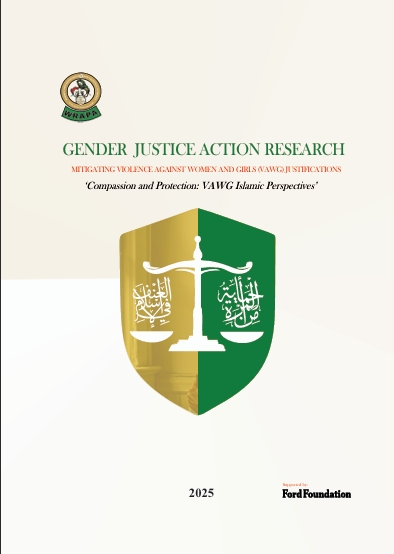
The WRAPA publication Compassion and Protection: VAWG Islamic Perspectives explains that concepts such as qawwamah and nushūz have sometimes been interpreted selectively in ways that create room for abuse, while ignoring the broader Qur’anic and Prophetic teachings on mercy and justice (WRAPA & CICID, 2025, p. iv).
The publication further emphasises that Islamic marriage is built on “mutual love, compassion, respect, and fairness” (WRAPA & CICID, 2025, p. 1). This is important because any interpretation of marital responsibility that produces cruelty, humiliation, or violence must be examined against the broader values of Islam.
Much of the controversy surrounding Qur’an 4:34 centres on the term Wadhribuhunna, often translated as “strike them.” Over time, this translation has shaped how some communities understand discipline and power within marriage. However, the WRAPA-CICID research cautions that this verse should not be read as a general permission for violence. Rather, it must be understood within its context, its procedural limitations, and the wider objectives of Islamic law.
The research explains that Qur’an 4:34 outlines a gradual process for dealing with serious marital discord, beginning with admonition, then separation in bed, before the disputed final step. Even then, the report stresses that this is not a command or an open licence for harm, but a heavily restricted matter within Islamic jurisprudence (WRAPA & CICID, 2025, pp. 1, 5–6).
This distinction matters. Islam does not treat power as permission for abuse. Responsibility in Islam is tied to accountability. Leadership is tied to service. Authority is tied to restraint. If qawwamah is understood as care and responsibility, then violence becomes a failure of that responsibility, not its fulfilment.
The example of the Prophet Muhammad ﷺ is also central to this conversation. The WRAPA-CICID research notes that the Prophet never struck a woman or child and strongly discouraged the mistreatment of women (WRAPA & CICID, 2025, p. 4).
His example provides a practical model for how Qur’anic values should be lived within the home: with patience, gentleness, fairness, and mercy.
Islamic jurisprudence also recognises the principle that harm must not be inflicted or returned with harm. The report connects this principle to the broader objectives of Islamic law, especially the preservation of life, dignity, family well-being, and justice (WRAPA & CICID, 2025, p. 4). This makes it difficult to defend any interpretation of Islam that normalises injury, fear, humiliation, or abuse within marriage.
At the same time, violence against women cannot be understood through theology alone. Culture, patriarchy, silence, social pressure, and weak accountability systems also shape how religious texts are interpreted and applied. In many communities, harmful practices survive not because they reflect the full spirit of Islam, but because they have been normalised over time and protected by social acceptance.
The WRAPA-CICID research notes that many women face knowledge gaps around their rights and the correct interpretation of religious teachings, while also confronting societal pressure and barriers to justice (WRAPA & CICID, 2025, p. 3). This means that enlightenment must go beyond quoting verses. It must include proper teaching, community dialogue, legal awareness, and stronger accountability for harm.
The Qur’an also instructs:
“And live with them in kindness…” Qur’an 4:19
Read together, these verses present marriage not as a space for cruelty or domination, but as a relationship governed by mercy, responsibility, accountability, and mutual dignity.
The question, therefore, is not simply whether certain verses exist, but how they are understood, taught, and situated within the wider moral framework of Islam.
A fuller Islamic reading does not offer a blanket justification for violence against women.
It calls for responsibility to be exercised with compassion, power to be restrained by accountability, and marriage to remain a space of tranquillity, not fear.
References
The Qur’an. Surah An-Nisā’ 4:1, 4:19, 4:34; Surah Ar-Rūm 30:21.
Women’s Rights Advancement and Protection Alternative (WRAPA) & Centre for Islamic Civilisation and Interfaith Dialogue (CICID). (2025). Compassion and Protection: VAWG Islamic Perspectives: Mitigating Violence Against Women and Girls (VAWG) Justifications. Bayero University, Kano, Nigeria.
